
Parent Communication: Acres Future Curriculum
Moving to Future-Ready Classrooms!
Hasanat High School is all set to transform its classrooms and empower students for the 21st century…
Why is Transformation Necessary?
If we want to nurture and bring forth from within the highest potential of each child in today’s world, then our classrooms must resemble the modern workplace and our children must become experts in using modern tools for communication and creative work…
Acres Future Curriculum - Student Content Website
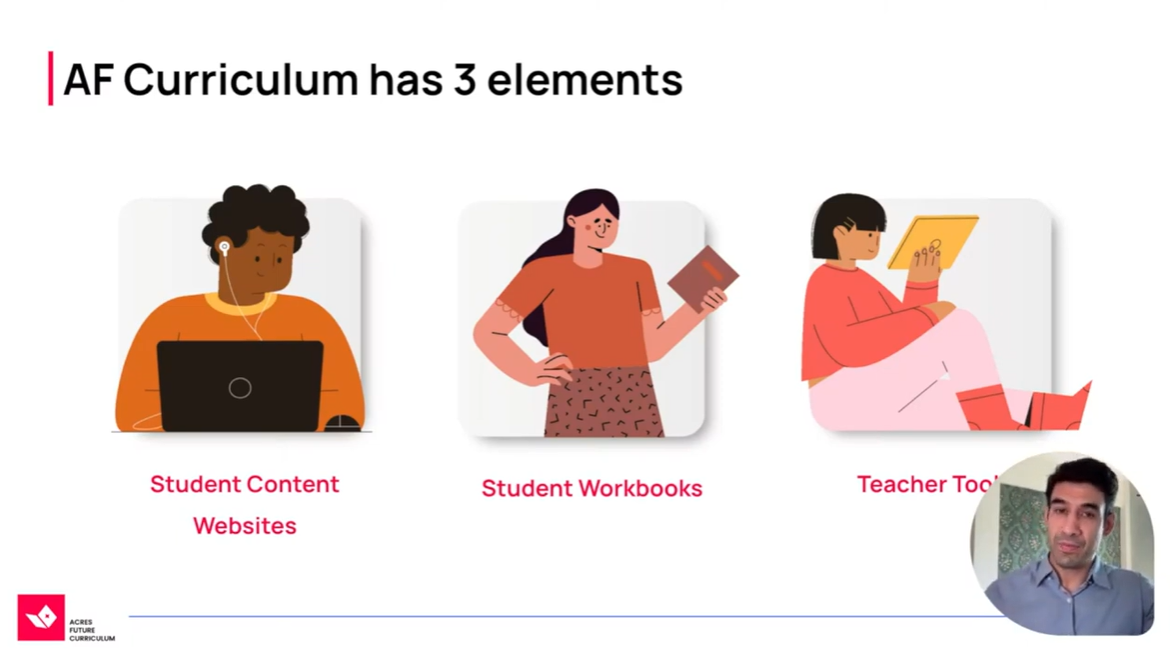
Let’s take a look at the learning resources on the student content website and what makes them special…
Google Classroom as LMS
Let me show you around Google Classroom as this is the learning management system that you and your child will use to communicate with the teacher daily and monitor assignments and student progress.
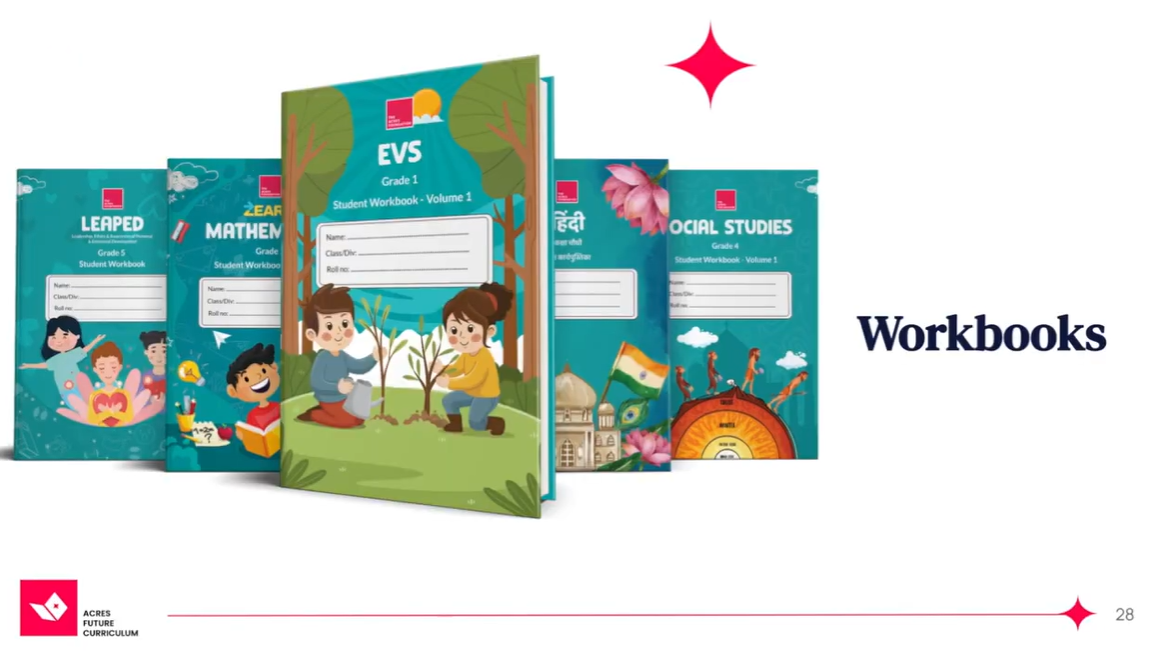
Acres Future Curriculum - Workbooks
The Acres Future Curriculum workbooks engage students in handwriting practice and help students revise and apply the concepts taught in class to promote higher order thinking and deeper understanding of the content…
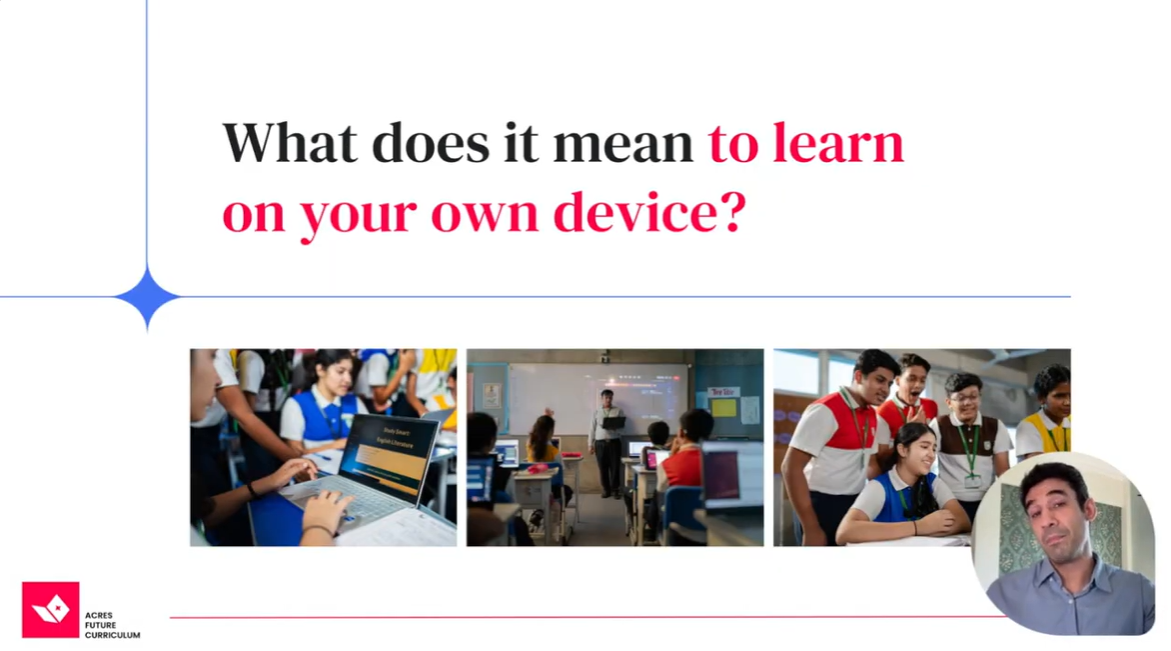
Using Devices in the Classroom
The Acres Future Curriculum requires each student to have their own laptop in the classroom. Why and how do we use devices?
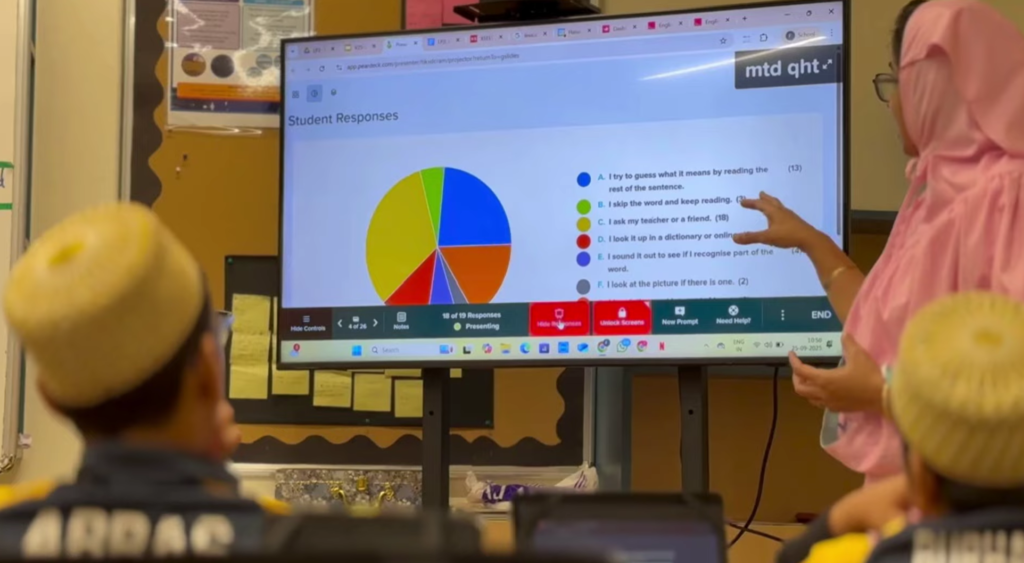
AFC in Action at HHS
The AFC program implemented in Grade 4 at Hasanat transformed classroom teaching by integrating richer, multimodal content and digital formative assessments. This enabled students to receive immediate feedback during lessons and increased engagement through interactive quizzes and games. The program also showed dramatic improvements in students’ foundational digital literacy skills.
FAQs for Parents
What is the Acres Future Curriculum?
The Acres Future Curriculum (AFC) is an ICSE-aligned program that transforms teaching and learning to help students succeed in the 21st century. It is a hybrid program, combining physical resources like printed workbooks with digital resources accessed through a personal laptop used in the classroom. AFC emphasizes deeper learning, critical thinking, and real-world skills, while staying rooted in the ICSE framework.The Acres Future Curriculum (AFC) is an ICSE-aligned program that transforms teaching and learning to help students succeed in the 21st century. It is a hybrid program, combining physical resources like printed workbooks with digital resources accessed through a personal laptop used in the classroom. AFC emphasizes deeper learning, critical thinking, and real-world skills, while staying rooted in the ICSE framework.
Who designed the Acres Future Curriculum?
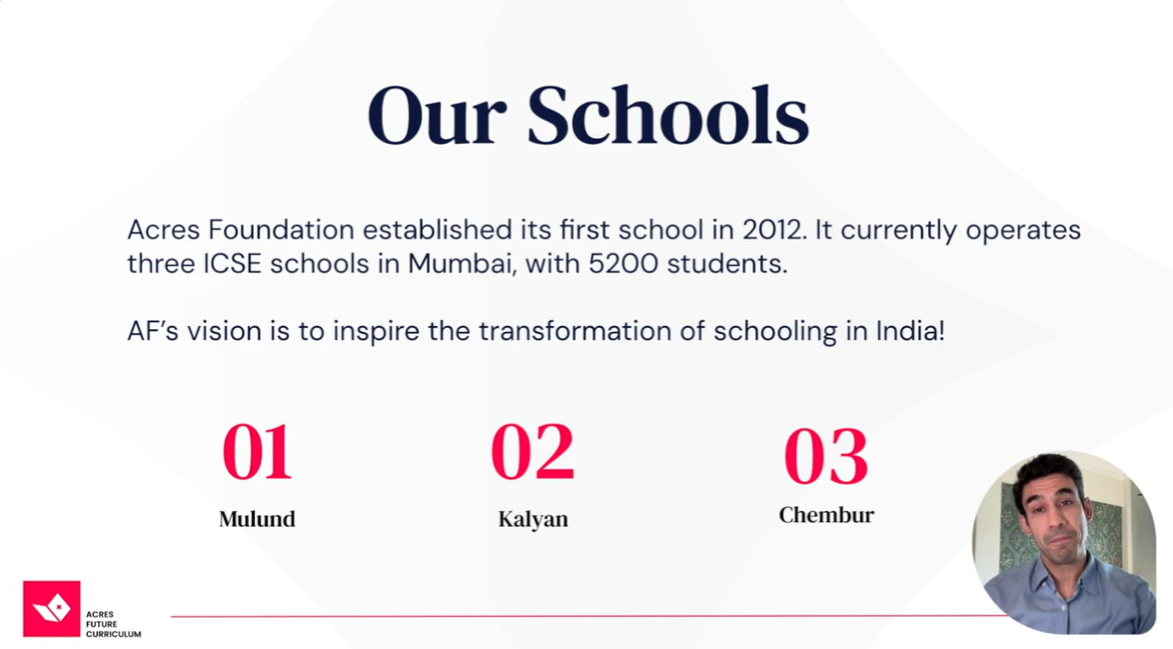
The Acres Future Curriculum was designed by the Acres Foundation (AF), which established its first school in 2012 and currently operates three award-winning ICSE schools in Mumbai, serving over 5,200 students. AF’s vision is to inspire the transformation of schooling in India, and as part of this vision, it actively shares its innovative curriculum with schools across the country.
Which grades is the Acres Future Curriculum designed for?
The Acres Future Curriculum is designed for Grades 2 to 7. It was piloted in Grade 4, and based on its success, it will now be implemented across Grades 2 to 6. Additionally, it serves an examination preparation resource for students in Grades 9 and 10.
What subjects are included in the Acres Future Curriculum?
The Acres Future Curriculum covers core subjects such as Mathematics, Science, Social Studies, English and IT. Subjects like Diniyat, Arts, Sports, Hindi, and Marathi will continue to be taught using Hasanat’s existing curriculum.
What are the benefits of using the Acres Future Curriculum?
The Acres Future Curriculum offers several key benefits. It leads to higher student engagement in classrooms, provides richer and more relevant content that is regularly updated, and gives students access to powerful digital tools such as online assessments, interactive quizzes, simulations, word processors, and presentation software. These tools help students learn more effectively and develop essential 21st-century skills. Our goal is to help students not just do well in exams — but to thrive in life.
Is the Acres Future Curriculum research-based?
Yes. The curriculum has been tried and tested with over 3600 students at The Green Acres Academy over the past three years. Research shows that students using AFC pay more attention in class and learn more effectively. These findings have been published in international, peer-reviewed scientific journals — making it one of the few school programs in the world with such backing. If you are interested in academic research, you can check out these studies we published related to the use of technology in our classrooms → Study 1, Study 2, and Study 3.
Which devices will students use in the classroom, and why?
Students will use Chromebooks in the classroom. Chromebooks are the most affordable yet powerful devices available today, making them ideal for schools. They allow students to learn how to use essential tools such as word processors, presentation software, spreadsheets, and more — all of which are critical for collaboration, communication, creativity, and success in the modern world.
Also, by having all students bring Chromebooks, we will be able to ensure the highest levels of online security and monitoring through our school’s IT team.
How much screen time will my child have each day with the Acres Future Curriculum?
Students will not be using their devices continuously throughout the day. Device use is intentional and purposeful, focused on activities such as research, personalised learning tasks, or assessments. There is no fixed time or specific part of the lesson for device use; instead, it is integrated meaningfully when needed. On average, students will use digital tools for less than 20% of the school day, ensuring a healthy balance between digital and physical learning.
We follow screen time guidelines recommended by child development experts and ensure a healthy balance between digital and physical learning.
But isn’t screen time bad for children?
That’s actually the wrong question to ask — it’s like asking whether food is good or bad for children. Junk food is harmful, but nutritious food is essential. The same is true for screen time. Watching TV, scrolling through social media, or playing violent video games for hours can be harmful — but using technology for learning is both beneficial and necessary.
In today’s world, children need to know how to use digital tools for research, communication, collaboration, and creation. If we don’t teach them how to use technology responsibly and productively, they will be unprepared for the modern workplace and life beyond school.
Will using devices negatively affect my child's handwriting development?
No. Device usage is limited to specific activities during certain parts of the school day. Students will continue regular handwriting practice through exercises in workbooks and notebooks, and will also complete handwritten assessments throughout the year. Handwriting development remains a key focus in our curriculum.
Will students get distracted with devices in the classroom?
No. Technology is used in a structured and purposeful way in the classroom. Our teachers are trained to integrate devices with clear learning goals, and students use their Chromebooks only at specific times for focused tasks under supervision. Additionally, systems are in place to monitor usage, block distracting apps or websites, and ensure a safe, distraction-free learning environment—so technology supports learning effectively rather than taking away from it.
How will my child stay safe online?
We take digital safety seriously. All devices are configured with safe browsing filters and security settings to block inappropriate content. One of the key advantages of standardizing devices to Chromebooks is that it gives us, as administrators, strong control over students’ online access. For example, we can restrict websites and content, prevent installation of unauthorized software, limit email use to the domain, and monitor browsing activity.
In addition, we teach students digital citizenship, including how to stay safe, respectful, and responsible online. This helps build lifelong habits for safe and responsible tech use.
Will teachers be trained to use this new curriculum and technology effectively?
Absolutely. All our teachers undergo extensive training in both the Acres Future Curriculum and the use of educational technology. This includes hands-on workshops, subject-specific guidance, and ongoing support throughout the year. In addition, teachers will be supported through mentoring, collaboration time with peers, and regular check-ins to ensure they feel confident and well-prepared in the classroom.
What support will be available if students or parents face technical issues?
A dedicated technical support system will be in place. The school’s IT team will support both students and teachers in resolving any classroom-related issues. Parents will also have access to a helpdesk email for troubleshooting support at home. In addition, simple guides and resources will be provided to help families feel confident using the devices.
Since Zearn has multiple-choice questions, will my child get enough practice solving problems on their own?
Zearn is designed to be used alongside a notebook, where children solve and work through problems during both teacher-led lessons and independent digital practice. This helps them actively practice, not just select answers. Additionally, extra notebook-based practice questions are provided for children who would like more practice at home.
For any further queries, kindly reach out to
Ms. Lubaina Arsiwala at
Lubaina.arsiwala@hasanathighschool.com